

Where AI in Manufacturing Is Headed, According to the People Building It
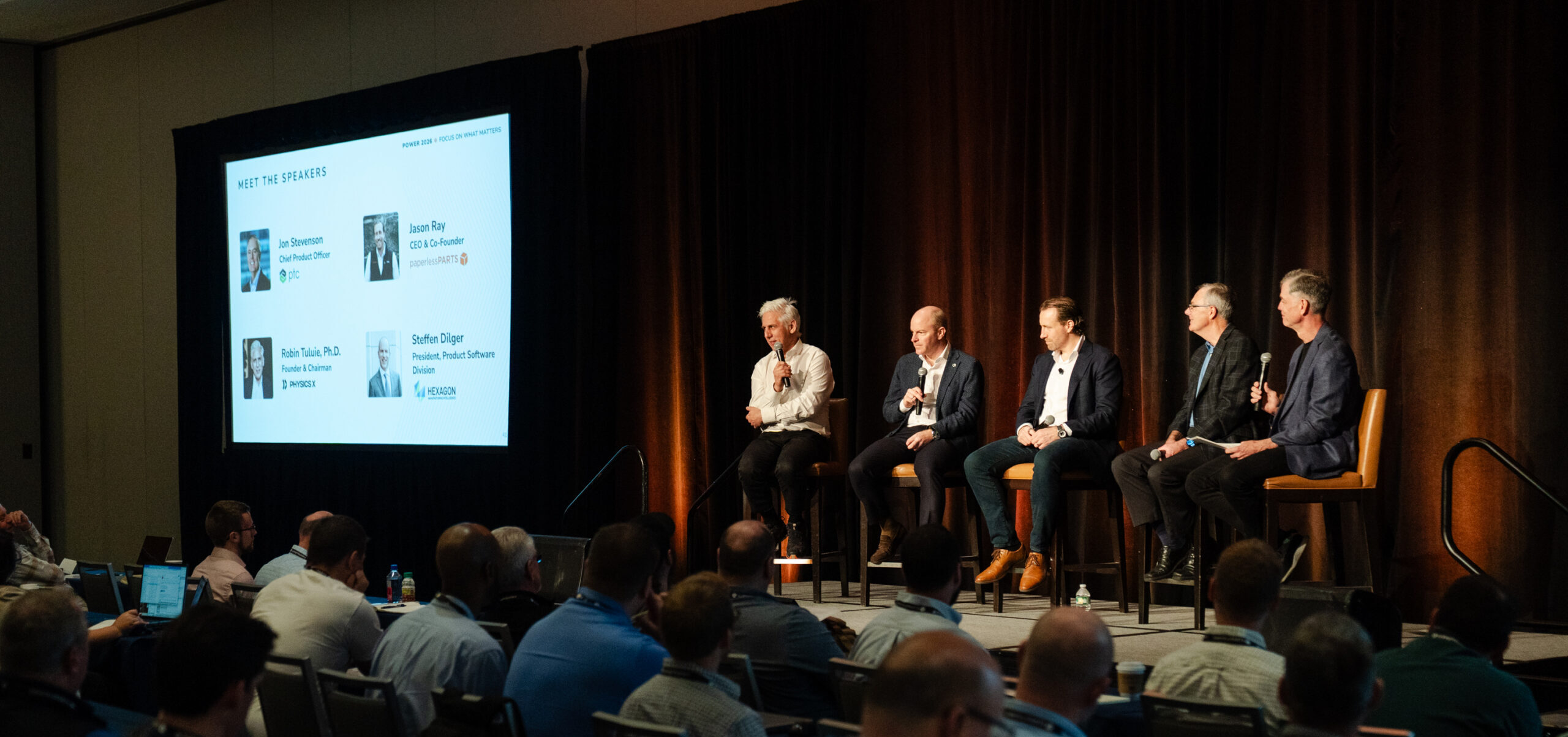
More than 350 leading manufacturers gathered in Boston for Paperless Parts’ annual user conference, POWER 2026. No session drew more attention than the AI panel, which included a rare assembly of executives who shape how AI gets built, sold, and deployed across manufacturing.
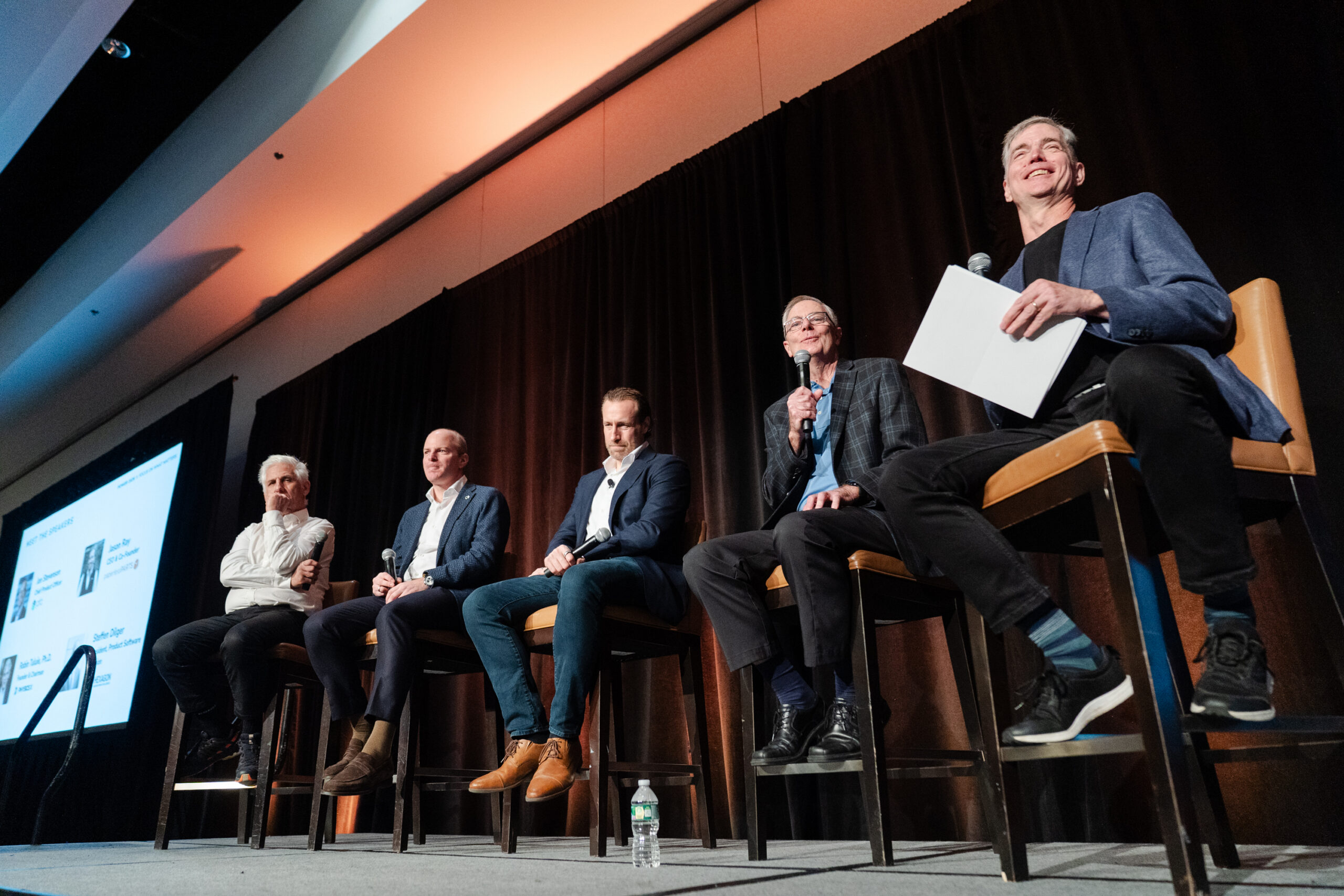
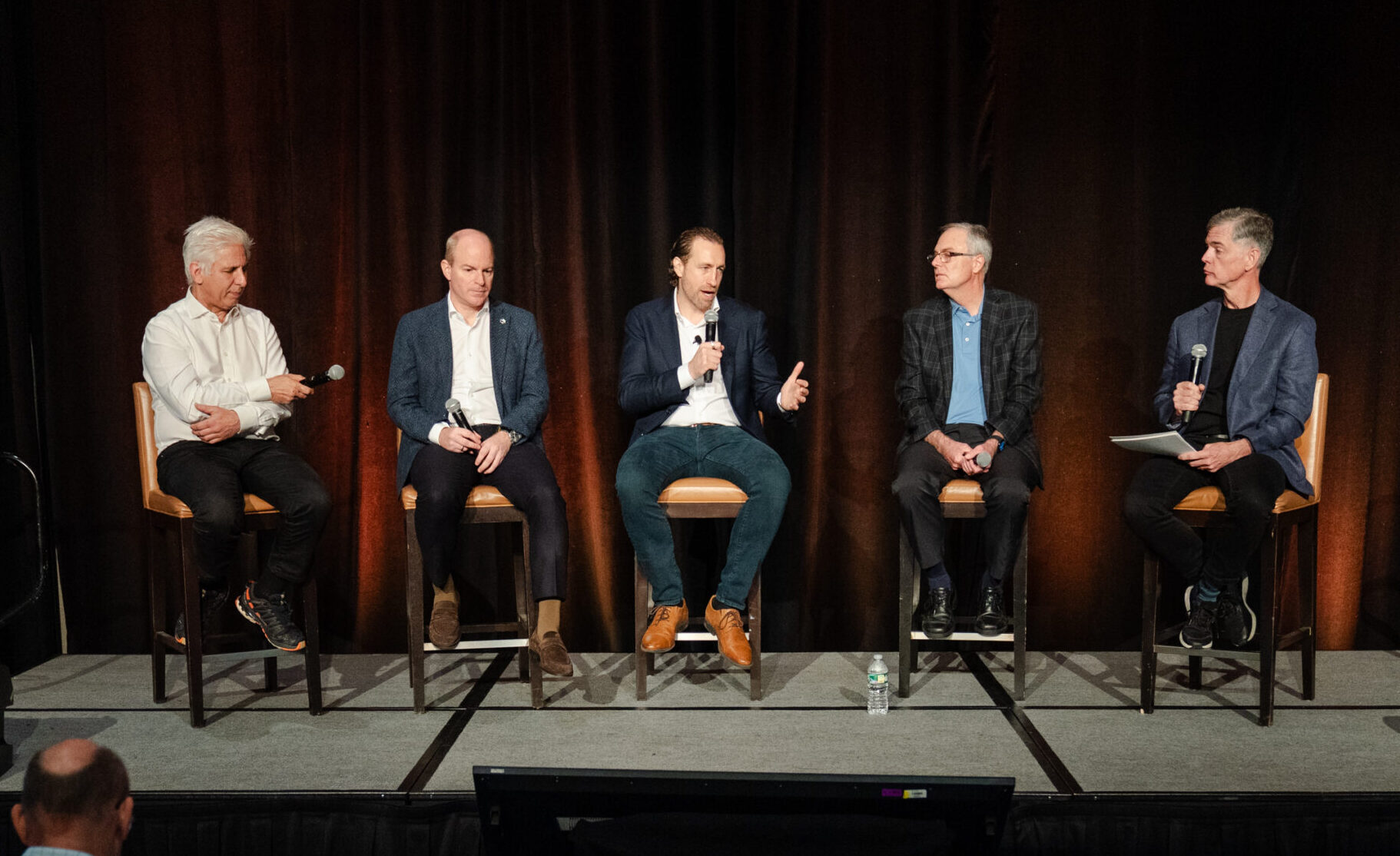
Moderated by industry veteran Jim Baum, who described four decades of front-row seats to “every platform shift” from mainframe CAD to the cloud, the panel featured:
- Jon Stevenson, Chief Product Officer at PTC, the nearly $3B digital thread company whose customers include Airbus, Blue Origin, Toyota, BMW, as well as the AI giants themselves: Microsoft, Meta, Amazon, Nvidia, and Google.
- Jason Ray, Co-Founder and CEO of Paperless Parts, the leader in manufacturing quoting software built to help manufacturers use AI to quote faster and make better decisions in the front office.
- Steffen Dilger, President of the Production Software Division at Hexagon, in from Frankfurt to share the perspective of one of the world’s leading industrial technology companies.
- Robin Tuluie Ph.D., founder of London-based PhysicsX, a physicist whose Formula One pedigree includes engineering work with Mercedes-AMG Petronas.
To stream the full recording of the panel on demand, head over to the Paperless Parts YouTube channel.
Asked to rate AI’s importance to their company’s strategy on a 1–10 scale, three panelists answered 10. Tuluie, whose firm is a pure-play AI company, shocked the audience when he answered 8. “Because AI is in service of our physical engineering, from concept optimization all the way to manufacturing process or operational optimization,” he explained.
Cutting through the noise
Ray opened with a warning shot. “I try to be an AI realist,” he said, “because I watched the 3D printing bubble go pop.” AI, in his view, is a tool in the toolbox rather than a finished product, and it earns its keep on “rote, repetitive tasks” that streamline workflows. What he had less patience for was the louder pitch coming from many software vendors, which is that every manufacturer will soon “vibe code” their own software. That pitch, in Ray’s reading, is really vendors offloading work they are “underfunded or too lazy to produce” themselves.
Stevenson zoomed out the conversation a bit; he bluntly shared why he recently left a quieter life as a board member and investor to take the CPO role at PTC. “I think we’re at a defining moment where everything’s going to change again,” he said. “This is going to be a bigger transformation than what happened with the internet in the late nineties.” And that’s no small claim from someone who lived through the internet wave at PTC.
The silent economics
While he’s a huge believer in the transformative power of AI, Ray argued that today’s AI economics are a mirage. “You are heavily subsidized in what you’re using,” he warned, pointing to the venture dollars flowing into Anthropic and OpenAI, which dwarf what once bootstrapped Amazon. “The economic model you’re building your assumptions around is likely to change.”
Ray pushed the point further with an analogy. AI dependency, he said, is a lot like autopilot.
“A pilot’s skills degrade if they get used to relying on autopilot all the time. We can’t afford that in this industry.”
Manufacturing is already bleeding skills, and a generation of engineers who never learned to think hard because the model thought for them is a bigger risk than most leaders are pricing in.
“One-size-fits-all” does not fit manufacturing
One of Stevenson’s lines drew the biggest laughs of the panel. Explaining why large language models cannot simply generate manufacturable CAD geometry, he gave the audience a simple challenge: “Try to describe geometry with your hands in your pocket,” he said. It is nearly impossible, and that is precisely the problem. Generating geometry is highly interactive, and language is a poor substitute.
Ray picked up the thread later when the panel turned to discuss hiring and the skilled labor shortage, noting that telling a machine what to do is kind of like describing geometry, and that being able to communicate clearly and concisely will be one of the most valuable skills in the next generation of manufacturing talent.
Where does the value actually lie?
For Tuluie, the question of value has a simple answer borrowed from his years in Formula One. “Only the results on a Sunday matter,” he said. “Nothing else matters.” He applied the same logic to AI in manufacturing, where the only honest measures are:

- Gains in product performance.
- Speed-to-market.
- Quality.
PhysicsX builds what Tuluie calls “large physics models,” not large language models, and uses them to predict casting voids, optimize toolpaths, and surface design geometries no human would arrive at unaided.
Dilger encouraged the audience to look at AI through an operator’s reality. Demos tend to work because demo data is clean. Real shop floors have shift handovers, aging PLCs, and noise, and that inherent chaos is what causes most proofs of concept to fall apart. The point of AI in production, Dilger argued, is not raw speed but having a good foundation for sound decisions early in the process.
Trust and your data
The final theme of the panel was trust. Tuluie spoke first about traceability, describing how every model at PhysicsX carries a full lineage of training data, simulation sources, and validation history. “Trust in engineering is built by the results that are created on the back of predictions,” he said. The more those predictions hold up over time, the more the tool earns its place in the workflow. AI, he argued, should be held to the same standard engineering has always applied to new methods, not a softer one.
Ray then added a layer that manufacturers often miss; trusting the AI is one thing, but trusting the arbiter of the AI is another. “Can you trust the company you’re working with when they say our models are going to get better because you’re loading data into it, that it’s actually making it better for you, and not exposing some of your secret sauce to someone else?” That question, he noted, is showing up in more and more customer NDAs.
Where to start (or double down) today
Asked how a company just starting its AI journey should begin, Dilger advised against trying to boil the ocean. Map your processes first, find the workflows where AI could solve an actual problem, and start there.
Ray’s suggestion was highly actionable:
“When you get home from this conference tonight, buy a personal subscription to Claude for $20 a month, and use it to do something in your personal life. Within two hours, you will understand what you can do.”
From there, the leap to your business gets a lot shorter.
Ultimately, all four panelists encouraged the room of 350 manufacturers trying to make sense of AI to ask themselves, “Where can this technology help my business today, and what needs to be true before I trust it?”
To stream the full recording of the panel on demand, head over to the Paperless Parts’ YouTube channel here.