
Flow, Not Friction: The Art of Thoughtful Innovation in Modern Manufacturing
When you run a manufacturing business, you’re constantly balancing curiosity and focus. You want to stay open to new ideas, but you also need to make sure those ideas solve real problems, not create new ones.
Over the course of my time as founder and CEO of KAD Models & Prototypes, I’ve chased plenty of shiny objects. Sometimes a new tool or software looks like the next big thing, then halfway through the implementation, you realize it’s just making things harder. Instead of force-fitting, I’ve learned to pause and ask:
- What problem are we actually trying to solve?
- How much time will this take to implement?
- Once we’ve invested that time, will it keep helping us, or demand constant attention?
I like to think of our shop as a stream: every process and person contributes to the current. When you add something new, it should make the water run smoother. Too often, though, people throw sticks (sometimes entire boats) into the river and then wonder why nothing’s moving.
You can’t just keep adding more stuff. The goal is to make it easier to move more work through the stream, whether that’s ducks or superyachts.
Finding Flow with Technology
Paperless Parts is one of those technologies that genuinely improves the flow of our stream. Quoting faster means work moves through the business faster. The more efficient we are up front, the less chaos we create downstream. Implementing the system five years ago taught me that the right technology helps you move faster, while also helping your people focus on what matters. It removes friction, builds consistency, and creates more time for actual problem-solving.
A lot of shops talk about automation like it’s a finish line; you add a robot, you add some software, and you’re done. But that’s never the case. Automation should relieve pressure, not eliminate thought. Once you automate, the next question should be, “What do you do with the time you’ve freed up?”
If you gain three extra hours a day, you could just fill those hours with more work—but that only gets you so far. The better investment, from my experience, is giving that time back to your people. Let them learn something new or explore a better process. When a team has the time and space to improve, the whole shop levels up.
I’ve seen too many shops where the same handful of people have done things the same way for years. And it might work fine, until someone retires and their knowledge walks out the door with them. That’s why automation and education need to happen simultaneously.
Innovate for the Right Reasons
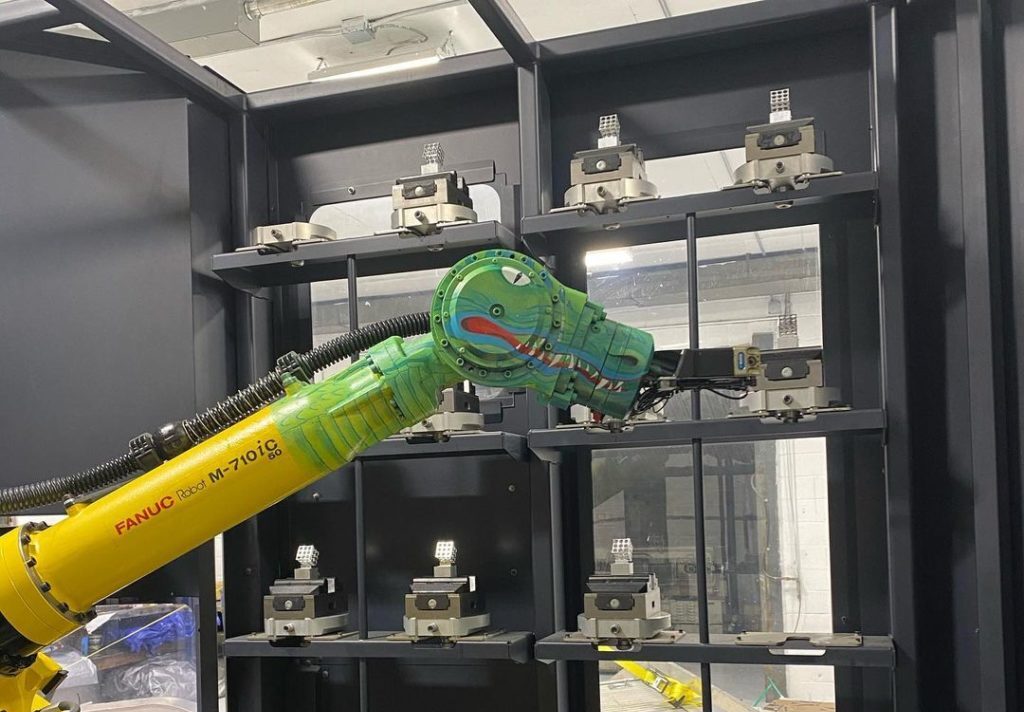
When we bought our first Trinity robotic cell, we were the first prototype shop—and the first shop on the East Coast—to do it. I didn’t buy it to show off; I bought it because I believed it would help our team and, in turn, help the industry. If enough of us push the boundaries, we all get better (a rising tide lifts all boats, if you will).
In the United States today, manufacturing isn’t as competitive domestically as people think it is. There’s still so much work being outsourced overseas. If we want to grow, we need to invest in knowledge and education, not just equipment. Complaining about the system without contributing to solutions doesn’t move anyone forward.
Investing Upstream
Keeping the stream flowing doesn’t stop at your own shop. How can we prepare the people who will carry the current forward?
In 2023 and 2024, I taught advanced manufacturing and fabrication at a technical high school. I saw firsthand how many students are told they’re not “book learners,” while others are steered toward college without ever seeing that hands-on manufacturing is creative, rewarding, and full of opportunity.
When students get to make something tangible, their whole perspective changes. They understand why the math matters. If we can show that to more young people, we’ll be much better equipped to build the next generation of innovators.
But we can’t keep waiting for someone else to fix the pipeline. The industry will move as fast as we help it move. I’d love to see more manufacturers invest in education in their own communities. It doesn’t have to be a huge commitment! Offer a tour, sponsor a class, donate scrap material, spend an hour mentoring. Every little bit helps keep the stream moving.
The Innovator’s Dilemma
I want to run a company I’d want to work for; one that’s always learning, improving, and staying curious. If you get too comfortable with the way things are, you’ll quickly lose the people who want to build what’s next.
The challenge of being an innovator is that progress always creates new problems. Every time we make something more efficient, new responsibilities appear. You automate a machine, but now you need someone to manage the system. You digitize quoting, and now you need to think about cybersecurity compliance. We should always be moving, just moving with purpose.
At KAD, we’re seeing manufacturing evolve beyond the blue collar stereotype. So much of the work now happens in front of a screen, requiring people to think deeply before they ever touch a machine. Manufacturers used to just show up, punch in, and start cutting. Now, we’re thinking about what our machines are doing while we sleep. By no means does that mean we need fewer people, it just means we need smarter systems and better education so those people can take on higher-level work. Technology gives us more time, and education determines how we use it.
Keeping the Stream Flowing
The shops that thrive in the next decade will be the ones that use technology to gain time, and then reinvest that time into people, partnerships, and their communities. Open houses, school collaborations, shared resources with other shops—all of these expand the current and help more people see what modern manufacturing really looks like.
Innovation is a current that never stops moving. Every new solution you bring into your shop should make that current stronger and smoother. If it doesn’t, you need to rethink it.
Don’t just throw boats into the middle of the river. Clear the path that will best help the ducks move through and keep the stream flowing. That’s how we keep manufacturing alive, relevant, and exciting for our teams, our customers, and the next generation watching from the shore.
—
Brian Kippen is the President and CEO of KAD MODELS & PROTOTYPES. KAD specializes in CNC machining, silicone molding, and urethane casting from their two locations in California and Vermont.